Too many teams invest in AI features that customers notice first, rather than the parts of the product they actually depend on. These are features that demo well, make the roadmap look current, and give leadership something easy to point to as proof that the product is keeping up. That can help create attention, and sometimes it helps in a sales cycle.
The most valuable places are usually deeper in the product, in the parts customers rely on to get work done, make decisions, avoid mistakes, or trust enough to act on. If AI is not improving those parts, the product may look smarter without becoming more important.
The Garage Test
When my wife and I moved to Portland more than 20 years ago, we looked at more than 50 houses in person, plus who knows how many online. At some point, our very patient real estate agent started cutting through all the noise with what he called five tests: the yard test, the school test, the garage test, the neighborhood test, and the floor plan test.
In the end, the house we bought passed all but one of those tests. I did not get the three-car garage I wanted. I still think about that sometimes, especially when I am working on a car in a garage that is way too full. But we bought the house anyway because it passed the tests that actually shaped daily life, and we are still in that house 21 years later.
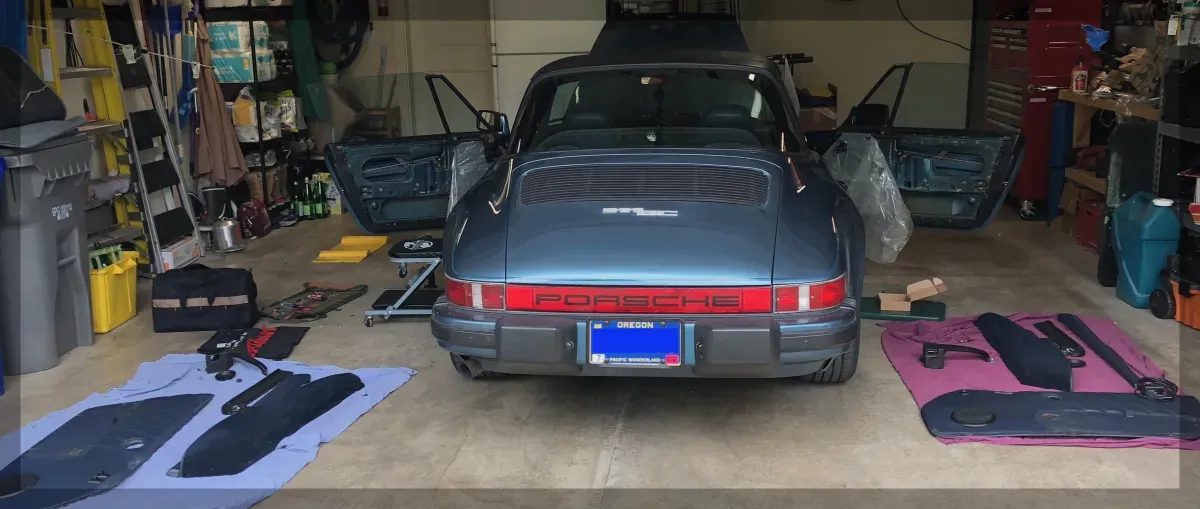
I never got the three-car garage I wanted. Still here 21 years later, still making it work. The obvious feature is not always the thing that matters most.
Many AI product decisions work the opposite way. Teams spend money on the equivalent of the garage test, the thing that is easiest to see, easiest to show, and easiest to point to. The better bet is usually deeper in the product, in the places customers actually depend on.
Where AI Actually Creates Value
Visible features are not worthless, and some of them matter. But visibility is not the same as value, and it definitely is not the same as advantage. The real question is whether the AI feature changes customer behavior in a way that matters. Does it save time in the workflows people use every day? Does it help them make a decision faster or better? Does it reduce risk or error, remove manual work they hate, or make the product something they would actually miss if it disappeared?
Those are better questions than "Where can we add AI?" A lot of teams default to the wrong question because the wrong question is easier. It is easier to spot the surface-level feature that feels ready for AI, to imagine how it will look in a demo, to market it, and to explain it internally. It is much harder to rethink the part of the product that customers actually build dependence on. That is why so much AI work ends up shallow. It creates motion, but not much leverage.
You can see the pattern in very different kinds of products. In customer support software, the obvious AI move is helping an agent draft a better reply. That demos well. But the higher-value move is often deeper in the workflow: correctly routing the case, surfacing the right customer context, flagging escalation risk, and helping the team respond consistently before the relationship gets worse. In infrastructure software, the obvious move might be to add a natural-language chat layer. Again, easy to show. But the more valuable investment is often in reducing alert noise, correlating signals, and helping teams get to the likely root cause faster when something is actually failing. One kind of AI gets noticed. The other gets relied on.
The strongest AI bets usually sit in places that are painful, frequent, high-stakes, or deeply embedded in how the customer works. They shorten the path to a decision, remove manual effort from repetitive work, improve consistency where inconsistency creates risk, or make the product more trustworthy right where trust matters. Those improvements are not always flashy and sometimes barely visible from the outside. That is fine, because customers do not build dependence based on what looked impressive in a launch post. They build dependence based on what quietly makes their work better every day.
A Better Question for Product Teams
"Customers will notice it" is a weak filter for AI prioritization. A better filter is simpler: would customers notice its loss?
AI lowers the cost of building. Everyone can see that. What is easier to miss is that it also lowers the cost of building the wrong thing faster.
So the job is to ask where better AI would deepen the customer's reliance on the product, the operational and embedded parts that customers trust, organize their work around, and would genuinely miss. That is a harder question to answer than "where can we add AI?", and it usually pulls you away from the most visible features. It may not give you the easiest story to tell in the next launch announcement or board meeting. But it gives you a much better chance of building something customers actually care about keeping.